Sleep Science · Mattress Buying Guide
Inside Vispring’s Innerspring Craft: What Construction Can Tell You
A mattress may look like a quiet, upholstered rectangle. Beneath its tailored surface, however, lies a carefully arranged system of springs, comfort layers and fabric choices that shapes the way it feels night after night. Understanding those elements makes it easier to look beyond a polished name and ask the questions that matter.
Published November 6, 2026
Vispring is associated with traditional innerspring mattresses, a category whose appeal rests on a deceptively simple idea: resilient springs support the body, while upholstery softens and refines the surface. But “innerspring” is not a single construction recipe. Spring type, count, arrangement, tension, edge treatment and upholstery all influence the result. Two beds can share the same broad label and feel remarkably different.
That difference is why construction deserves more attention than a list of luxurious materials or a headline spring count. The question is not whether a mattress sounds elaborate. It is whether its parts work together for your body, sleep position, room temperature, foundation and daily habits. A close reading of construction can turn a mattress comparison from a vocabulary exercise into a practical decision.
This guide looks at the features consumers can compare when considering Vispring or any other innerspring mattress. It does not assume that one spring system is best for everyone, or that traditional craftsmanship automatically guarantees a particular feel. Instead, it offers a framework for evaluating support, motion, upholstery and the terms that follow the sale.
Start with the architecture: what is an innerspring mattress?
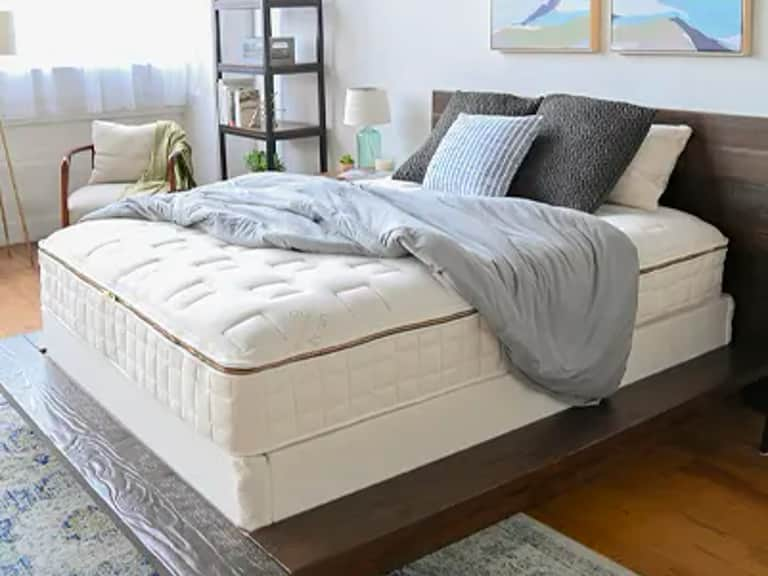
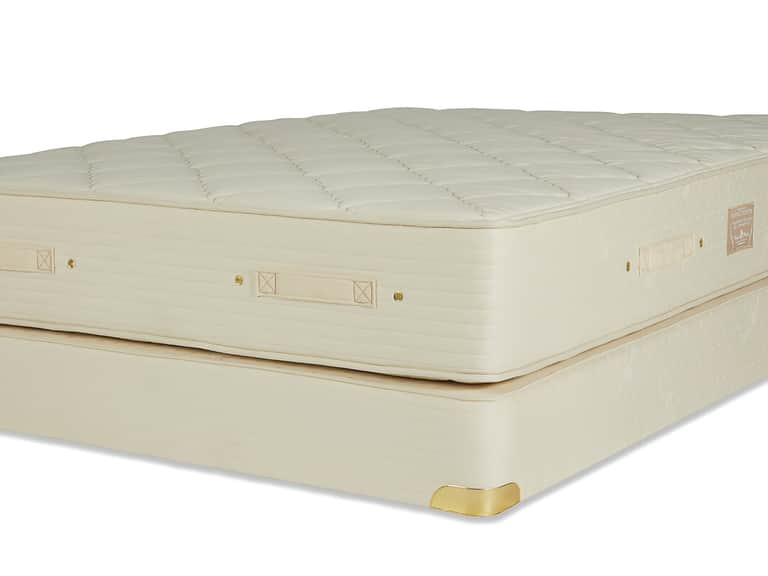
At its simplest, an innerspring mattress contains a spring unit beneath its comfort layers. The springs compress under load and return toward their original shape when pressure is removed. Above them, upholstery materials create the initial sensation of softness, cushioning or firmness. A fabric cover encloses the assembly, and the mattress edge may use additional reinforcement or a particular perimeter design.
That outline leaves plenty of room for variation. Springs may be connected in a linked system or individually wrapped in fabric pockets. Their diameter, height, wire gauge, shape and tension can differ. The comfort layers might include wool, cotton, latex, foam or other materials, in different thicknesses and arrangements. Even the same spring unit can feel unlike itself when paired with a different upholstery package.
It helps to picture the bed as a coordinated system rather than a single “support core.” Springs influence the response beneath the body; the upper layers affect how quickly pressure is softened and how much the sleeper settles into the mattress. The cover, quilting and edge construction make further contributions. A change in one layer can alter the impression of the whole bed.
Pocket springs and the question of movement
Pocket springs are individual coils enclosed in fabric pockets. Because each coil can respond more independently than springs joined into a single interconnected unit, this construction is often intended to limit the spread of movement across the bed. The idea is intuitive: pressure in one area may be less likely to pull neighboring springs into the same motion.
“Less movement” does not mean no movement. The degree of motion transfer depends on more than spring type. The arrangement and firmness of the spring unit, the materials above it, the mattress size and the weight and movement of the sleepers all contribute. A cushioned top can absorb some disturbance; a responsive surface may transmit it differently. If sharing a bed, consider testing the mattress with a partner rather than relying on a phrase such as “motion isolation.”
Spring count is another number that invites easy overinterpretation. A higher count may reflect more coils, but it does not by itself tell you how supportive, durable or comfortable a mattress will be. Counts can also be reported for different mattress sizes, and manufacturers may count different components in different ways. Ask what the figure refers to, what size it applies to and how the complete construction is intended to perform.
For a useful comparison, focus on the full specification: spring type, layout, any zoning, upholstery materials and the brand’s description of the intended feel. If the answers are vague, the number alone is unlikely to make them clearer.
Support is a sensation as well as a structure
In mattress language, “support” can be made to sound like a measurable promise, but shoppers experience it through a combination of alignment, pressure relief and comfort. A supportive mattress should help the body rest without an uncomfortable sense of sinking, strain or concentrated pressure. The right balance varies with body shape, weight distribution, sleeping position and personal preference.
Side sleepers often notice pressure around the shoulders and hips. Back sleepers may pay closer attention to whether the lower back feels comfortably supported. Stomach sleepers may prefer a surface that does not allow the midsection to sink excessively. These are starting points, not rules: the same firmness label can feel different to different people, and firmness is not a direct measure of spinal alignment.
It is also useful to separate the mattress’s initial surface feel from its deeper response. A plush quilted top may feel welcoming when you first lie down, while the support layers beneath determine how the body is held as it settles. Conversely, a mattress can feel firm at first contact but still allow enough contouring for comfort. A brief showroom test may not reveal the full experience, so a clearly explained home trial can be valuable.
When testing, spend time in your usual sleep position. Notice whether you feel pressure, whether your body seems level and whether turning requires effort. If you share the bed, assess both sides and how the mattress responds when one person moves. These observations are more useful than trying to translate “medium-firm” into a universal promise.
The upholstery layers: where character takes shape
Springs do not define the whole personality of an innerspring mattress. Upholstery is the layer—or series of layers—between the sleeper and the spring unit. It may provide cushioning, contouring, breathability or a more buoyant feel. Natural fibers such as wool and cotton, latex and various foams each have different properties, but a material name alone does not tell the whole story. Thickness, density, placement and construction matter too.
Wool, for example, is often discussed for its ability to manage moisture and contribute to a comfortable sleep climate. Cotton may be used in covers or padding. Latex can offer a responsive, resilient feel. Foams vary widely in formulation and performance. Rather than treating a material as an automatic sign of quality, ask where it appears in the mattress, how much is used, whether it is blended with other materials and how it may change with wear.
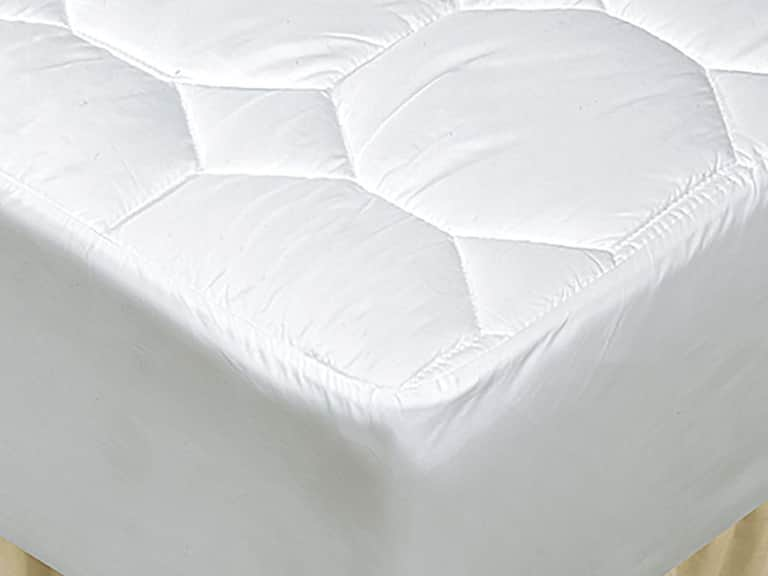
Quilting can also influence the first impression. A tightly quilted cover may feel different from a lofty, cushioned surface, even where the underlying spring unit is similar. The surface fabric can affect breathability and durability, while the way the cover is attached may influence maintenance options. A non-removable cover, for instance, calls for a different cleaning plan from a mattress with a washable or replaceable component.
These details are especially relevant when comparing traditional, heavily upholstered designs. A sumptuous top layer can be part of the appeal, yet more cushioning is not automatically better for every sleeper. It can change how deeply the body settles and may make the bed feel warmer. Construction should be judged as a whole, with comfort and practical care given equal weight.
Edge support, access and the reality of everyday use
The mattress perimeter is easy to overlook until you sit on the edge, share a bed or use its full sleeping surface. Edge support may be created through stronger perimeter springs, additional framing or other design choices. It can affect how stable the edge feels when sitting down and how much of the mattress feels usable, but the result is model-specific.
Try the edge in more than one way: sit where you would normally get dressed, then lie near the side in your sleeping position. A mattress that feels steady for one person may compress more under another. If a bed is placed on a frame with a particular edge or rail arrangement, that base can influence the experience as well.
Practical details belong in the construction conversation. Check the mattress’s weight, whether it is designed to be turned or rotated, and whether its cover can be cleaned or repaired. Some mattresses are one-sided; others may be reversible. Do not assume a traditional appearance means a mattress should be flipped. Follow the manufacturer’s care instructions for the exact model.
A useful comparison beyond the Vispring name
Comparing a product with a clearly described construction can help make the language of mattress design more concrete. For example, the Naturepedic EOS Classic Mattress is described as a customizable, multi-layered design with an 8-inch support layer and a 3-inch comfort layer. Its product information identifies pocketed springs alongside organic Dunlop latex and other materials, and notes that firmness can be configured. That makes it a useful example of how a product description may separate the support core from the comfort layer.
This is not a like-for-like verdict on Vispring, nor evidence that one design is superior. It illustrates why shoppers should examine the details behind a category label. Ask whether a stated measurement describes the spring unit, the comfort layer or the whole mattress; whether the design can be adjusted; and which materials create the surface feel. Construction descriptions are most useful when they let you compare like with like.
For Vispring models in particular, consult the specification for the exact mattress you are considering. Brand-level reputation cannot substitute for model-level information. Spring configuration, upholstery and firmness can differ across a range, and the retailer should be able to clarify how the chosen model is built and what that construction is meant to deliver.
How to read claims without getting lost in the language
Mattress descriptions often combine technical terminology with evocative words: “bespoke,” “natural,” “hand-finished,” “responsive” or “luxurious.” Such language can communicate design intent, but it may not answer the practical questions a buyer needs to resolve. Ask for specifics, and distinguish measurable construction details from broad descriptions of experience.
- Spring system: Are the coils pocketed, linked or arranged in another way? Is there zoning, and what does it mean for the sleeper?
- Spring information: What is the count, what size does it apply to, and how are the springs arranged?
- Comfort layers: Which materials are used, where are they placed and how thick are the layers?
- Feel: How is firmness described, and can you test the exact model rather than a similar one?
- Care: Should the mattress be rotated or turned? How should stains and routine wear be handled?
- Compatibility: Which foundation or bed base is recommended, and are there restrictions on slats or adjustable bases?
- Terms: What do the trial, return, delivery and warranty provisions actually cover?
Certifications and material claims deserve the same careful reading. If a specific standard is cited, check what it certifies, which materials or processes it covers and whether the claim applies to the finished product or only a component. “Natural” and “organic” are not interchangeable terms, and neither guarantees that a mattress will suit a particular sleeper.
The foundation beneath the mattress matters
A carefully constructed mattress needs an appropriate base. The wrong foundation can affect feel, ventilation and long-term performance, and may also have consequences for warranty coverage. Check the manufacturer’s instructions for acceptable slat spacing, frame support, foundation type and use on adjustable bases. If you are keeping an existing bed frame, confirm its dimensions and condition before ordering.
It is tempting to treat a foundation as an accessory afterthought. In practice, it is part of the sleep system: a stable, compatible base gives the mattress the support it was designed to receive. Ask whether the recommended foundation is required or simply preferred, and whether different bases alter the feel. A floor model tested on a showroom platform may not behave identically on a flexible slatted frame at home.
Warranty, trial and the fine print of confidence
A warranty is not a guarantee of comfort. It generally addresses specified defects under defined conditions, while normal softening, stains, improper support and damage may be treated differently. Before buying, read the full warranty document rather than relying on a summary. Look for the length of coverage, what qualifies as a defect, how claims are assessed, who pays for transport and whether the remedy is repair, replacement or another option.
A sleep trial serves a different purpose: it gives you a period to assess comfort in your own bedroom. Check when the clock begins, whether a minimum break-in period applies, whether a return or exchange fee is charged and whether the mattress must be used with a suitable protector or foundation. Ask whether comfort exchanges are available, how many are allowed and whether the original product must be kept in a particular condition.
Delivery arrangements matter, too. Traditional or heavily upholstered mattresses can be substantial, and access to a bedroom may involve stairways, narrow landings or elevators. Confirm whether delivery includes setup, removal of the old mattress and packaging disposal. Clear answers before purchase are part of a good buying experience, not an administrative footnote.
A measured way to choose
Begin with your own sleep habits. Note your main position, whether you sleep alone or share the bed, your sensitivity to motion or warmth and any recurring pressure discomfort. Then shortlist mattresses whose stated construction appears compatible with those needs. Treat firmness labels and luxury language as prompts for questions, not final answers.
When possible, test the exact model. Lie down for several minutes in your ordinary position rather than perching briefly at the edge. If you share a bed, test together. Ask the retailer to explain how the spring unit, comfort layers and edge design contribute to the feel you are experiencing. If the response relies only on a spring count or a broad brand claim, ask for the specification sheet.
Finally, compare the practical terms side by side. A mattress that feels promising but has an unsuitable base requirement, unclear return policy or difficult care routine may not be the right choice for your household. Good construction is not an abstract accolade; it is a design that makes sense for the sleeper and the setting in which it will be used.
The lasting appeal of a well-made spring mattress
Innerspring design endures because it can combine resilient support with a layered, tailored surface. In a traditional mattress, the experience emerges from many decisions: how springs are configured, how the upholstery is built, how the edges are finished and how the complete bed is intended to be maintained. Those choices can give a mattress a distinctive character, but they do not eliminate the need for personal testing and careful comparison.
For anyone exploring Vispring, the most revealing question is not simply whether the mattress is traditional or luxurious. It is how the particular model is constructed, what that construction means in use and whether its stated terms work for you. Read the specifications, ask precise questions and give your own comfort the final word. The best-informed purchase is the one in which the craft is visible not only in the description, but in a sleep experience that feels right for the person who will use it.