Bedding · Sleep Comfort
Wool Toppers: How Natural Insulation Shapes Sleep Comfort
A wool topper can lend a bed a gentler surface and a more balanced feel, while wool’s distinctive relationship with warmth and moisture may help make the sleep environment more comfortable. The details matter: fill thickness, fabric, care requirements, and the mattress beneath all shape the result.
There is a particular appeal to bedding made from materials that feel quietly considered rather than engineered to announce themselves. Wool has long occupied that space. It is familiar, tactile, and naturally insulating, yet its behavior is more nuanced than the simple image of a warm blanket suggests. In a mattress topper, wool can add a light cushion and influence how heat and moisture are experienced at the sleep surface.
That does not mean every wool topper will feel cool, plush, or transformative. Wool products differ in fill amount, fiber preparation, quilting, and cover construction. A thin, compact layer may subtly soften a mattress; a loftier one can create a more noticeable buffer. The mattress’s firmness, the sleeper’s preferred position, room temperature, sheets, and personal sensitivity to heat all remain part of the equation.
Understanding those variables is more useful than relying on broad promises. Wool is not a substitute for choosing a mattress that provides appropriate support, and no topper can guarantee uninterrupted sleep. But for someone looking to fine-tune a bed without replacing it, wool may be worth considering as a natural insulating and cushioning layer.
What makes wool different?
Wool fibers have a naturally crimped structure. In bedding, that structure helps create small pockets of air within the fill. Air is a good insulator, and the resulting layer can soften the sensation of a firm surface while moderating the exchange of warmth between the body and the mattress. The precise effect depends on how much wool is used and how densely it is arranged.
Wool is also hygroscopic: it can take up water vapor from its surroundings. In practical terms, this quality may help the bedding handle some of the moisture produced during sleep, rather than leaving all of it directly at the skin or trapped in a tightly sealed surface. The fiber’s response is not a promise that a bed will remain dry under every condition. Humidity, ventilation, bedding layers, and the amount of moisture involved all matter.
These characteristics explain why wool is often described as breathable and temperature-regulating. Those phrases should be read as descriptions of material behavior, not as guarantees that a topper will keep every sleeper cool. Wool is insulating, so it can feel comfortably warm in a chilly room; in other circumstances, its moisture-management properties and an open construction may contribute to a less clammy feeling than some dense, heat-retaining layers. Individual experiences vary.
Wool also has a particular hand. It tends to feel springier and less enveloping than many memory foams, though the cover and quilting can soften or firm the first impression. Some toppers feel gently buoyant; others are flatter and more tailored. If you expect the slow, contouring sensation associated with foam, wool may seem comparatively subtle. Its role is often to refine the surface rather than dramatically reshape the mattress.
Wool topper, foam topper, or fiberfill?
Comparing materials is not a matter of identifying one universal winner. It is a matter of deciding what kind of adjustment the bed needs. Foam toppers often make a more pronounced change in pressure relief and contour, with the feel varying by foam type and density. Fiberfill layers may create a soft, familiar cushion, though loft and resilience can change over time. Wool typically offers a different balance: modest cushioning, insulation, and moisture handling, with a less enveloping response than many foams.
For someone seeking a dramatic plush layer, wool may not provide enough depth on its own. For someone who wants to soften a surface slightly while preserving more of the mattress’s original character, a thinner wool topper may be appealing. The distinction is especially important when the mattress is already well suited to the sleeper’s body but feels a little too firm at the surface.
Material labels alone do not tell the whole story. A wool product’s cover may be tightly woven or more flexible; the fill may be held in place by quilting; and the finished thickness can differ from the loft it appears to have when new. Likewise, foam varies widely in responsiveness and heat behavior, while fiberfill products can range from airy to densely packed. Compare the construction and care details rather than treating any material category as a single, uniform experience.
- Wool: Often chosen for natural insulation, a springy hand, and moisture-management characteristics; its cushioning can be subtle or more substantial depending on fill.
- Foam: Can provide closer contouring and a more noticeable change to pressure relief, with the experience shaped by formulation and thickness.
- Fiberfill: May offer a soft, familiar surface at a range of lofts, but recovery and long-term shape depend on the fill and construction.
Start with the feel of your current bed
Before comparing products, identify what you would like to change. Is the mattress a little too firm at the surface? Does it feel warm or clammy? Is the discomfort caused by the mattress itself, or by a pillow, room temperature, or bedding layers? A topper can modify the first impression of a bed, but it cannot correct every source of discomfort.
Pressure that persists in a particular area, pronounced sagging, or a sense that the body is poorly supported may point to a mattress problem rather than a need for extra cushioning. Adding a topper to a worn or unsupportive mattress can mask symptoms temporarily without resolving the underlying issue. Conversely, when the mattress is supportive but its surface feels a touch unforgiving, a topper may offer a more proportionate adjustment.
Consider your usual sleeping position, too. Side sleepers often notice pressure at the shoulder and hip, while back and stomach sleepers may prefer a flatter, firmer surface. These are tendencies, not rules: body shape, mattress design, and personal comfort all influence what feels right. A very lofty topper can change alignment as well as softness, so more cushioning is not automatically better.
If possible, compare the topper’s expected thickness and construction with your present bedding. Keep in mind that a topper can affect fitted-sheet fit and the height of the sleep surface. Allowing for these practical details makes it easier to assess a purchase realistically, rather than focusing only on the advertised material.
How fill thickness shapes the experience
Thickness is one of the clearest clues to how much a topper may alter the bed, although it is not the only one. A thinner wool layer is more likely to make a restrained change: a little added softness, a slight buffer between sleeper and mattress, and some of wool’s insulating character. A thicker or higher-loft design may feel more cushioning and more distinct, but it can also shift the bed’s overall feel more noticeably.
Ask how the manufacturer defines thickness. Is the measurement the finished depth, an uncompressed loft, or an approximate figure that may change with use? A lofty topper can compress under body weight; the feel when handled may not match the experience after a full night. Quilting and fill distribution matter as well. If the wool is stitched into channels or pockets, the arrangement can influence how evenly it settles and how the surface feels.
Fill weight can provide another point of comparison when it is disclosed, but it should not be interpreted in isolation. Two products with similar dimensions may use different wool preparation or cover fabrics, producing different impressions. Look for clear specifications, care instructions, and information about how the topper is secured to the mattress.
As with any bedding layer, avoid choosing the thickest option simply because it sounds more luxurious. The best match is the one that addresses the specific shortcoming of the bed while preserving the support and ease of movement you already appreciate.
Cover construction deserves attention
The cover is the first part of the topper that meets the sheets and, ultimately, influences the surface feel. Cotton is commonly used for wool bedding and can provide a familiar, breathable outer fabric. The weave, weight, and flexibility of that cotton affect how the topper drapes and how directly the wool’s texture is perceived. A more structured cover may feel tidier and hold the fill in place; a softer, more flexible one may move more readily with the mattress.
Check whether the topper has corner straps, elastic, a fitted skirt, or another method of staying in place. A layer that shifts during the night can undermine comfort, even if its materials are otherwise appealing. Confirm that the attachment system suits your mattress depth and the bedding you use.
Read the label carefully for fiber content, certifications, and claims. Terms such as “natural” or “organic” do not by themselves explain the full construction or establish that every component has a particular certification. If a certification matters to you, verify which material it covers and what standard is being referenced. Product transparency is most useful when it identifies the fill, cover, construction, and care requirements plainly.
For people with sensitivities, it is sensible to consider both the wool and the outer fabric, as well as any storage or packaging odors. A natural material is not automatically suitable for every individual. If you have a known allergy or sensitivity, review product details and consult an appropriate health professional when necessary.
Temperature regulation without overpromising
Temperature comfort is personal and shaped by the whole sleep environment. A wool topper may help moderate the feel of a surface because wool insulates and can take up water vapor, but the result depends on the sleeper, room, mattress, and the layers above it. Heavy blankets, synthetic sheets, a warm room, or a mattress that retains heat can influence the experience just as much as the topper.
It is helpful to distinguish between heat and humidity. A person may feel warm because the room is hot, while another may experience discomfort as a damp or clammy sensation. Wool’s moisture-handling properties may be relevant to the latter experience, but they do not actively cool the body in the way a fan or air conditioning does. Nor can a topper compensate for an overly warm bedroom.
To judge whether the material is helping, make one change at a time. If you add a topper, avoid simultaneously replacing the sheets, duvet, and mattress protector. A few nights of observation can help you understand whether the new layer feels more comfortable, whether warmth has changed, and whether the mattress remains supportive. This is a practical way to separate expectation from experience.
People who sleep hot may wish to consider the complete bedding ensemble: breathable sheets, suitable blankets, room ventilation, and the construction of the mattress. Wool may be one part of that system, not a stand-alone solution. Similarly, a person who tends to feel cold may appreciate the extra insulation, while another may find it warmer than preferred.
Care, cleaning, and longevity
Wool toppers generally require more thoughtful care than bedding that can simply be put through a routine machine wash. Some are spot-clean only; others may have specific airing or professional-cleaning instructions. The manufacturer’s label should guide care, because washing, heat, or aggressive detergents can affect the wool fill, cover, or shape.
Before buying, consider where and how the topper will be maintained. A layer that is difficult to wash may still be practical if it is protected by washable bedding and aired as recommended, but it is not the ideal choice for every household. Spills, pets, children, allergies, and frequent laundering needs all influence how convenient a product will be in everyday use.
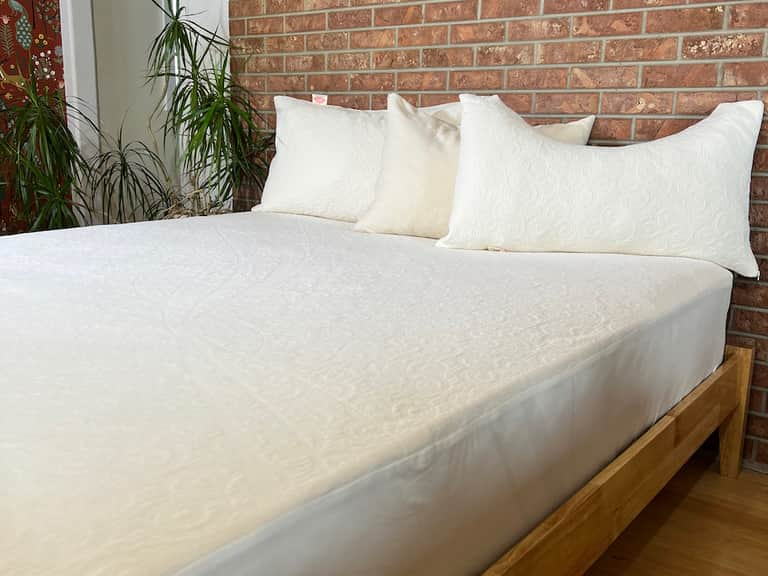
A washable protector can help shield a topper and mattress from ordinary soil, though the protector itself should be breathable and appropriately sized. For example, a fitted cotton layer such as the Suite Sleep Organic Cotton Knit Mattress Protector is made from GOTS-certified organic cotton jersey and is designed with deep pockets. Check its fit against the combined height of the mattress and topper, and follow the care instructions for both pieces.
Wool may compress or settle with use, as bedding fills naturally respond to repeated pressure. Turn or rotate the topper only if the maker’s instructions allow it; some designs have a designated top side. Airing can help refresh bedding, but avoid prolonged exposure to conditions that may damage fibers or covers. Sensible maintenance is less about elaborate rituals and more about following the product’s specific guidance consistently.
Compatibility with mattresses and sheets
A topper should work with the mattress underneath, not fight it. Check its dimensions against the mattress size and note the combined depth of the sleep surface. Deep-pocket sheets may be necessary if the topper adds considerable height, while elastic corner straps or a fitted design can help limit movement. Sheet sizing is an unglamorous detail, but an ill-fitting sheet can bunch, pull, or loosen the topper beneath it.
Think about the mattress cover and protector already in place. Some protectors are designed primarily to shield against dust and everyday wear; others add a waterproof layer. A waterproof membrane may influence airflow and the sensation of warmth, so the whole stack of materials matters. Avoid assuming that every layer described as breathable will behave the same once placed beneath other bedding.
Wool toppers are often considered alongside natural latex, cotton, and other natural materials. Each has its own feel and function. A mattress made with latex may feel resilient, while a wool layer can add a different kind of surface cushioning. The combination may suit some sleepers, but compatibility is a matter of preference and construction, not a universal rule. Check care, fit, and warranty guidance for the mattress before adding a separate layer.
Questions to ask before choosing
Clear product information can make comparison easier. Before committing, look beyond broad claims and ask practical questions about the construction and ownership experience.
- What is the fill composition, and is the wool identified by weight or only by a general description?
- What is the topper’s finished thickness, and how might it compress under use?
- What material is used for the cover, and how is the fill quilted or secured?
- Does the design include straps or another attachment method, and will it fit the mattress depth?
- Is the topper spot-clean only, washable, or subject to other care restrictions?
- Are any certifications stated, and do they apply to the wool, cover, or complete product?
- What is the return policy, and are there exclusions for opened bedding?
These questions are particularly useful because wool toppers can look similar in a product listing while differing substantially in construction. Specific answers help you compare like with like and set realistic expectations about comfort and upkeep.
A measured approach to better sleep comfort
Wool’s appeal lies in its combination of tactile softness, natural insulation, and ability to take up moisture vapor. In topper form, these qualities can create a more buffered sleep surface without the distinctly contouring feel associated with many foams. The effect may be delicate or more pronounced, depending on fill thickness, cover construction, and the firmness of the mattress beneath it.
The most useful choice begins with a clear assessment of what is missing from the current bed. If the mattress is supportive but slightly too firm, a wool layer may be a considered way to soften the surface. If the bed is sagging or the support feels wrong, a topper is unlikely to be a lasting fix. If heat is the concern, evaluate the entire bedroom and bedding arrangement rather than expecting one material to resolve it alone.
Compare specifications, read care labels, and check how the topper will fit with your sheets and protector. Pay attention to the return policy, especially since comfort is personal and descriptions cannot perfectly predict how a surface will feel after several nights. A thoughtful purchase is less about chasing a promise of perfect sleep than finding a material and construction that make the existing sleep environment more comfortable for you.
In that sense, wool is not a grand reinvention of the bed. It is a quiet adjustment: an insulating layer, a little cushioning, and a different relationship to warmth and moisture. For the right sleeper and mattress, that modest shift may be precisely what makes a familiar bed feel more inviting.